During a recent visit to my hometown I had the pleasure of sharing lunch with my dad and several of his train buddies (my dad is a model train enthusiast). Everyone in the room shared a love of trains and something else: we were all veterans. I think that’s unusual. Six veterans, not at some military function, all in one room at the same time.
During the lunch-time conversation, the death toll in Iraq came up and I mentioned that while the killed-in-action numbers were low, this had a great deal to do with the excellent battlefield medical attention. Today many many more of the seriously wounded than even 10 years ago would have died on their way to surgery are surviving.
That is putting a burden on the military medical system.
We may have spent half a trillion dollars so far fighting in Iraq, but, I’ll wager, we are going to spend several times that over the next 60 years or so caring for the disabled from this undeclared war.
Is it possible that some twisted budget logic attempting to keep that spending in check is responsible for kicking Army Ranger Eric Miller to the curb after serving our country for seven years, including a tour in Afghanistan?
From The Los Angeles Times:
Eric Miller’s career as an Army Ranger wasn’t ended by a battlefield wound, but his DNA.
Lurking in his genes was a mutation that made him vulnerable to uncontrolled tumor growth. After suffering back pain during a tour in Afghanistan, he underwent three surgeries to remove tumors from his brain and spine that left him with numbness throughout the left side of his body.
So began his journey into a dreaded scenario of the genetic age.
Because he was born with the mutation, the Army argued it bore no responsibility for his illness and medically discharged him in 2005 without the disability benefits or health insurance he needed to fight his disease.
Miller passed an enlistment physical. If the Army didn’t want anyone with his particular genetic condition, that was the time for it to have declared him unfit for service.
But at a time when enlistments are being extended and recruiters are still scrambling, no one wants to hinder the front-end of the process. Specially if you can cover your ass on the back-end.
“You could be in the military and be a six-pack-a-day smoker, and if you come down with emphysema, ‘That’s OK. We’ve got you covered,’ ” said Kathy Hudson, director of the Genetics and Public Policy Center at Johns Hopkins University.”But if you happen to have a disease where there is an identified genetic contribution, you are screwed.”
Representatives from the Pentagon declined multiple requests to discuss the policy.
The regulation appears to have stemmed from an effort to protect the armed services from becoming a magnet for people who knew they would come down with costly genetic illnesses, according to Dr. Mark Nunes, who headed the Air Force Genetics Center’s DNA diagnostic laboratory at Keesler Air Force Base in Mississippi.
The threat is almost certainly small. A 1999 military analysis estimated that about 250 service members are discharged each year for health problems involving a genetic component. Disability payments for them would amount to $1.7 million the first year and rise each year after that as more veterans join the rolls. Healthcare expenditures would have added to the tab.
“Maybe they didn’t want to foot the bill for my disability,” said Miller, whose rare genetic disease is called Von Hippel-Lindau syndrome. “It’s saving money for them. I’m just one less soldier that they have to dish out compensation to.”
It’s not like this issue has caught the military unawares. Congress began addressing the issue with legislation more than 10 years ago.
Congress took action in 1996, banning genetic discrimination in group health plans, and in 2000, President Clinton signed an executive order forbidding the practice against the federal government’s nearly 2 million civilian employees. Similar laws against genetic discrimination swept through 31 states.
Congress is working to extend the federal law with the Genetic Information Nondiscrimination Act, which would protect people with individual medical policies. The act has passed the House and awaits a vote in the Senate.
If you’re a veteran, know a veteran or just plain think this stinks, do as I’m doing this morning and let your representatives in Congress know how you feel and how you think they should vote on the Genetic Information Nondiscrimination Act.


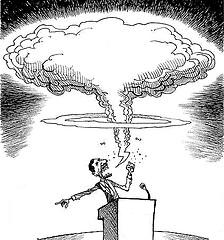
 I could never bring myself to forward all the email jokes, cartoons and other Internet comedy that land in my inbox. But then I started posting the ones my dad sends me. Judging from my comments and emails, my dad has become one of my greatest blogging assets. So for your morning blog chuckle I present:
  My name is Jeff Hess and I’m a biblioholic. I own hundreds of books. Not valuable books, mostly Science Fiction paperbacks and text books, tomes rescued by the bag from library book sales. A few years ago, in the interest of not burying myself, I began reading more books from the library and taking notes.
 I’m constantly tossing interesting websites into what I call my blogpile. Some of them find their way here in the form of regular posts, but more often than not they languish and get buried deeper in the pile. The end result is that I have to go back and do a bit of shoveling. Today’s item is
 Plenty of other bloggers like Jill and Scott are doing an excellent job of covering the Megan Papada flap. I’ve written comments at both