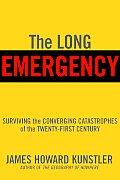
 Americans will vote for cornpone Nazis before they will give up their entitlements to a McHouse and a McCar. And you can quote him on that. So says James Kunstler in an interview with Katharine Mieszkowski for Salon. Kuntlser is talking about the energy emergency, he says, we’re already in, but when I read the quote, I thought about our entitlement society and saw a larger implication.
A few weeks ago, in the course of reviewing a History lesson with one of my students, I read President Franklin Roosevelt’s historic speech to the 77th Congress on 6 January 1941. In that speech Roosevelt said:
In the future days which we seek to make secure, we look forward to a world founded upon four essential human freedoms.
The first is freedom of speech and expression – everywhere in the world.
The second is freedom of every person to worship God in his own way – everywhere in the world.
The third is freedom from want, which, translated into world terms, means economic understandings which will secure to every nation a healthy peacetime life for its inhabitants – everywhere in the world.
The fourth is freedom from fear, which, translated into world terms, means a world-wide reduction of armaments to such a point and in such a thorough fashion that no nation will be in a position to commit an act of physical aggression against any neighbor – anywhere in the world.
That is no vision of a distant millennium. It is a definite basis for a kind of world attainable in our own time and generation. That kind of world is the very antithesis of the so-called “new order” of tyranny which the dictators seek to create with the crash of a bomb.
While the speech is visionary, one of the things my student and I discussed was how Roosevelts’ Four Freedoms compared to President Thomas Jefferson’s unalienable rights of life, liberty and the pursuit of Happiness. And it was on No. 3, Freedom from Want, that we hit the biggest snag.
Roosevelt said freedom from want meant securing a healthy peacetime life for all the world’s inhabitants. But what does that mean? What is healthy? How high up Maslow’s pyramid do we have to climb to satisfy this freedom?
Over the past 64 years, it seems to me, the definition of what constitutes Freedom from Want has been contiunously ratcheted-up for everyone. From the eight-year-old who wants an iPod to the billionaire developer who wants tax abatement for a business partk, Americans have come to believe that they have a right to what they want, regardless of the consequences for the rest of the nation or the world.
I want a lot of things. Do I have any right to what I want? No.
I’m reminded of a Zen story. A boy wished to study with a Master. Day after day the boy approached the Master, telling him that he wanted to learn from him, and day after day the Master turned him away.
One day the Master took the boy over to a water bucket, and grabbing the boy by the scruff of his neck, forced his head under the water and held it there. The boy kicked and struggled but the Master was too strong for him to break free.
At last, the Master pulled the gasping boy back to his feet and turned him around so that he could look him in the eye. “When you want to learn as much as you wanted to breathe just now. Come back and see me.”
There is a great chasm between Jefferson’s inalienable right to the pursuit of happiness and Roosevelt’s freedom from want. I think we need to have our heads thrust into the bucket for a bit. It couldn’t hurt.
My Soundtrack: The Volta Sound by The Volta Sound, demo EP.
 The New York Times begins a three-week series today on the issue of Class in America. I have argued for years that Race is not the issue in America; that it is, in fact, Class that divides us. Today’s series opener by Janny Scott and David Leonhardt says it well right from the headline: Class in America: Shadowy Lines That Still Divide.

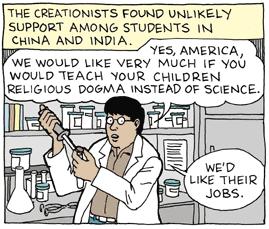
 In My Backpack…
  Do you suppose the Plain Dealer would have run this
 Real I.D. is the latest buzz word coming out of Washington. This week Congress approved and sent to President George W. Bush legislation that will require Americans to present four pieces of identification when they renew their driver’s license. This is a bad idea on many levels, not the least of which is that the legislation will have zero effect on its reported purpose: making life more difficult for terrorists.
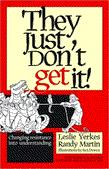 Randy Martin is another Phoenix regular and yesterday he came through with a copy of his brand-spanking new, hot off-the-presses business management book:

 Last Saturday in

 Jon Stewart, with his hilarious understanding of idiocy takes on cable channels CNN and MSNBC for their simpleton approach to taking advantage of this blog thing. As always, Jeff Jarvis at BuzzMachine is on top of the story and has pulled quotes and links to other commentators together in