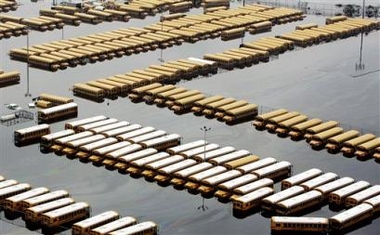

I think I would be hard pressed to find someone who hasn’t seen the above photo. And the image of all those school buses up to their hubs in flood water is a justified focus of rage of those who ask the legitimate question: why weren’t they used to ferry people out of the path of the storm. By my count, there are 300 buses in the photo.
I’ll be generous and assume that’s half of them.
Let’s say that on Saturday, 27 August, when Governor Kathleen Babineaux Blanco declared a state of emergency, the following happens. I don”t know the precise time of the order, but I”ll be kind and say it was issued sometime before dawn on the 27th. Let”s say 0300.
At 0300 then, phone calls go out to the 600 bus drivers, who were put on standby alert the day before. They are ordered to report to the lot no later than 0500. Now these men and women will have heroically kissed their families goodbye, trusting that their spouses and children will pack up the family car and drive north to safety. They are met in the lot by 600 police officers and sheriff’s deputies who will literally ride shotgun on each bus.
At 0600, the drivers roll out to a predetermined pick up spot and open their doors. They are on a tight schedule. In order to have any chance of moving enough people out of New Orleans, they must load their passengers and roll quickly. Assume it takes them 30 minutes to load and that they close the doors and pull out by 0800 Saturday morning.
A full-sized school bus can carry approximately 60 adults. I’ll be again generous and assume that an additional 20 children could be carried on their parent’s laps. Of course there’s no room for more than minor luggage — perhaps something half the size of what airlines allow as carryons — and no pets
So, for the first run out of town, our 600 bus drivers and 600 law enforcement personnel have 48,000 passengers. That’s a very respectable number. The busses drive north, assisted by a disaster-plan-mandated bus lane that additional police are maintaining so that the busses, which have to make a return trip, don’t get trapped in traffic.
Where do the buses go? Houston was one obvious choice. Distance? Approximately 350 miles from New Orleans. At say an average speed of 50 miles an hour (remember those special bus lanes?) that’s a seven hour drive. Figure two highly efficient refueling stations: one at the midpoint and one at the end point.
If 150 buses, carrying 12,000 evacuees (approximately the number the Astrodome was able to handle) make that trip, I don”t think that a drive time of seven hours plus another two hours for refueling and bathroom visits is unreasonable. Total drive time, nine hours one way, 17 hours roundtrip. Where do the other three, 150-bus convoys go? Good question. A glance at the map suggest that Memphis, Little Rock and Birmingham could be candidates with about the same drive time.
The cities have pre-positioned cots, water, food and medical supplies for their 12,000 guests who are processed by efficient city and state personnel.
The 600 buses that left New Orleans at 0800 with 48,000 passengers Saturday morning, roll back into the Big Easy at 0100 Sunday. The buses are met by another 600 drivers and their accompanying law enforcement personnel. The buses refuel and now, under pressure from the approaching storm, are at the Phase II collection points by 0300.
Another 48,000 passengers are loaded and by 0500 the buses roll again. Another nine-hour drive later, the buses unload their passengers. It”s now 1400 on Sunday. In two hours, the National Weather Service will issue a special hurricane warning. There are still people in New Orleans that must be gotten out. The bus drivers refuel and head back for one more trip, arriving in an already rain drenched city at 2100 Sunday night.
The bus drivers switch off one last time with the original drivers and law enforcement personnel. Water is beginning to wash over the levees. The buses are back at their pickup points by 2300 Sunday and the last of the citizens to be evacuated thankfully climb on board. The doors close one last time and with police escorts clearing the way, the last of approximately 100,000 citizens without cars or other transportation escape their doomed city.
In less than 48 hours, the heroic bus drivers evacuated as many as 144,000 people, from a metropolitan population of approximately 1.3 million. Depending upon plans, somewhere between four and 12 cities will be caring for at least 12,000 and perhaps as many as 36,000 refugees each.
That”s the fantasy.
Anyone who has ever taken part in disaster planning or in any military action knows that no major city in the world is capable of pulling something like this off. Should the buses have been used? Hell yes. Would they have made a difference? To the people who got on them, they would.
Would they have provided The Answer? Not a chance.
There is only one organization in the world with the budget, personnel and mandate to come even close to something like this: The Federal Emergency Management Agency. And we now know how ready it was.
My Soundtrack: Miss Misery by Elliot Smith on WOXY.

 From Reuters: President George W. Bush took responsibility on Tuesday for failures in the federal government’s response to Hurricane Katrina. Katrina exposed serious problems in our response capability at all levels of government, and to the extent that the federal government didn’t fully do it’s job right, I take responsibility, Bush said.
 From
From  From
From 

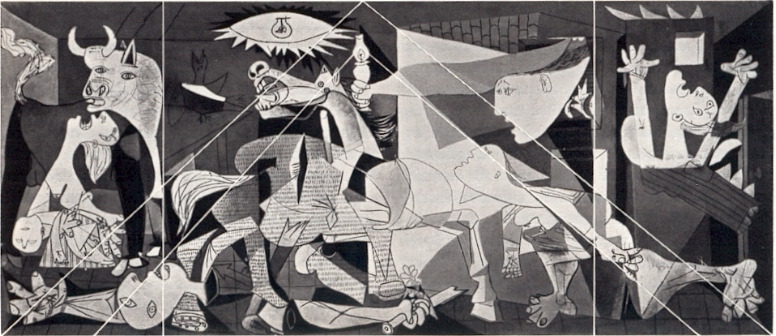
 On this date in 1981, Pablo Picasso’s painting Guernica was finally hung in Spain. Picasso had refused to allow it to be shown in the country as long as General Franco was in power. Of his art,


 Bill Callahan has been working to set up Internet communications for refugees from Hurricane Katrina. I received the following call for assistance last evening. I’m going to attempt to orgnaize my Sunday school students to do some real world learning on Sunday. This is a chance for bloggers to make a difference. See you there.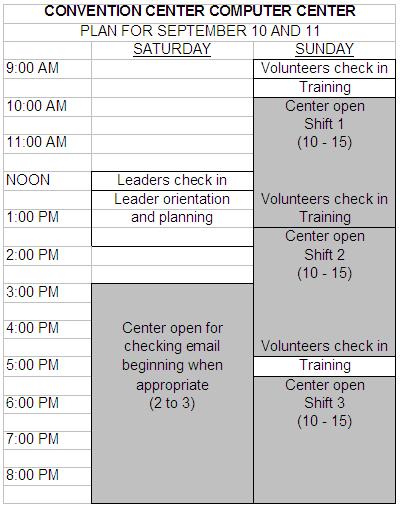
 After a mind numbing week of bad news piled on bad news, we finally got
  I agreed with one of my readers yesterday when they said that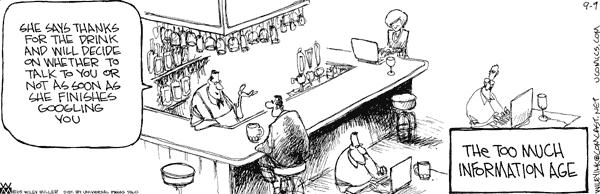
 From Jon Stewart: Now, for you people who are saying, Well, stop pointing fingers at the president… left-wing… the media’s being too hard: No. SHUT…UP! No! This is inarguably —
 … we shouldn’t be too full of ourselves.
 Andrew Sullivan has linked to two Hurricane Katrina timelines: