SUBVERSIVE BUMPER STICKER OF THE DAY…
1122 by Jeff Hess
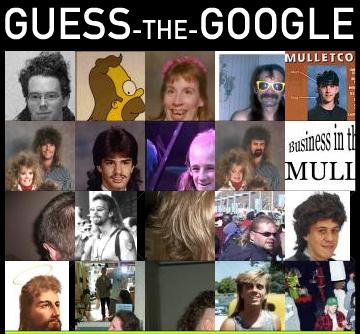 OK, so it’s a little silly, but it’s orginal. What may be fun is seeing how the toy industry manages to latch on to it so that it can make a buck. The game is Guess-The-Google. I found the game via Dan Wismar’s Wizblog. You can’t get a full explanation of the game by visiting creator Grant Robinson’s website. Robinson is the same artist who gave us Montage-A-Google.
My Soundtrack: Divine Light by Carlos Santana.
 In My Backpack… Reading Lolita in Tehran: A Memoir In Books by Azar Nafisi; In My Car… Invisible Man by Ralph Ellison; On My Nightstand… Farangs by Rattawut Lapcharoensap; On My Computer… Morning Glories by Mary Oliver; On My Screen… People I know (**) directed by Daniel Algrant, written by Jon Robin Baitz.
My Soundtrack: Chronicles by Rush
 My grandfather had a truly amazing collection of Popular Science magazines and one of my favorite activities during the summer months was taking a stack under my reading tree and discovering all the really cool things I could build. I think my most ambitious plan was a hang glider that I’m sure my dad is very happy I never actually built. The magazine has changed over the years and now it seems to be mostly Technoporn for the Jack Ryan wannabes.
My friend John Pike has discovered what may be the true heir to those days of near Tom Swiftian glory: Make Magazine. The magazine’s blog contains choice items such as a bamboo bicycle frame, a DIY Plastiprompter, a Pabst Blue Ribbon Condenser Mic Microphone, and a sound system for your scooter built for under $100.
I don’t know what to build first.
My Soundtrack: Yi-Ching Music For Health from Regimen.

Why are people upset about the photographs showing President George Bush holding hands while strolling with crown prince Abdullah? Culturally it is very common for men in the Middle East to hold hands while walking. And the president’s handlers (no pun intended) rightly pass this off as just an innocent example of that. It’s no big deal. Really. So why are conservatives like Chris Muir and others upset?
Terry over at I See Invisible People offered this insight: it’s because the U.S. is the girl!
The image of our very Texan president behaving like a Texas cheerleader has conservative brains doing their own version of the China Syndrome not because of the hand-holding, but because of the pleading way our President was playing up to the crown prince in order to get some oil relief. We’re the only Superpower left in the world. We don’t ask for things. We take them. We’re Men. Manly Men. Men. Men. Men Men. Men….
Sorry, Martin Mull moment there.

 BlogNashville, a free, three-day set of educational and informational sessions on blogging, runs this coming Thursday through Saturday at Belmont University in Nashville, Tennessee. And I found out about because one of the conservative cartoonist I read each morning – Day By Day by Chris Muir – has an ad for the confernece. How messed up is that?
I took a look at the list of the 252 people who have signed up so far and I found only one Ohio blogger: Nathaniel Livingston of Unite Cincinnati whose blog is Cincinnati Black Blog. The conference is sponsored by the Media Bloggers Association (of which, Muir is a member). I quick-scanned its members list and didn’t see any local names that I recognized. (That doesn’t mean they’re not there, of course, just that I didn’t see anyone that I knew.)
A lot has been written over the past six months about blogging conferences. So much so that potential blog-conference panel member Jeff Jarvis has started to get a little testy about the whole thing. And it makes me wonder about the value of blogging conferences where the major activity is passive: i.e. listening to panels of experts.
That’s very different from what we do at the blogger meet-ups. We have conversations. We don’t listen to experts. Conferences and workshops are so last century. If the 20th century was about Information, then the 21st century is about Insight, and you gain Insight by engaging in dialogue.
It worked for Socrates.
My Soundtrack: Around The Block by Real Life
In My Backpack… Reading Lolita in Tehran: A Memoir In Books by Azar Nafisi; In My Car… Invisible Man by Ralph Ellison; On My Nightstand… Nothing But Ghosts by Judith Hermann; On My Computer… Fathers in the Snow by Susan Cataldo; On My Screen… Homicide: Blood Ties (***) directed by Alan Taylor, written by Anya Epstein, Tom Fontana and Julie Martin.
My Soundtrack: Living With Her Hair On Fire by Kimberli Ransom.
 Explain this to me? According to The Motley Fool, Google is now valued at $60 billion, $60,000,000,000; more than three times Starbucks. (And for the record, I still believe that friends don’t let friends drink Starbucks.) I don’t think I’m a complete idiot. I did OK in college economics. I was a business writer for nearly 15 years. But this just does not make any sense what so ever to me. What is going on?
My Soundtrack: Greatest Hits by Rachmaninoff
In My Backpack… Reading Lolita in Tehran: A Memoir In Books by Azar Nafisi; In My Car… Invisible Man by Ralph Ellison; On My Nightstand… Nothing But Ghosts by Judith Hermann; On My Computer… Knowledge by Susan Cataldo; On My Screen… Statement (*) directed by Norman Jewison, written by Ronald Harwood and Brian Moore.
My Soundtrack: Jaco Pastorius by Jaco Pastorius.
 This nearly quarter-century-old quote from Senator Barry Goldwater (R-Az.) has been flashing around the web over the last few days in reaction to Senate Majority Leader Bill Frist’s participation in the Justice Sunday media event in Louisville, Kentucky. While I haven’t seen the actually text, the best attribution I can find is to the 16 September 1981 Congressional Record.
I like to think that these words are representative of the feelings of conservatives like my friends John Pike and Richard Montanari. What Sen. Goldwater is quoted as saying is:
However, on religious issues there can be little or no compromise. There is no position on which people are so immovable as their religious beliefs. There is no more powerful ally one can claim in a debate than Jesus Christ, or God, or Allah, or whatever one calls this supreme being. But like any powerful weapon, the use of God’s name on one’s behalf should be used sparingly.
The religious factions that are growing throughout our land are not using their religious clout with wisdom. They are trying to force government leaders into following their position 100 percent. If you disagree with these religious groups on a particular moral issue, they complain, they threaten you with a loss of money or votes or both.
I’m frankly sick and tired of the political preachers across this country telling me as a citizen that if I want to be a moral person, I must believe in ‘A,’ ‘B,’ ‘C,’ and ‘D.’ Just who do they think they are? And from where do they presume to claim the right to dictate their moral beliefs to me?
And I am even more angry as a legislator who must endure the threats of every religious group who thinks it has some God-granted right to control my vote on every roll call in the Senate. I am warning them today: I will fight them every step of the way if they try to dictate their moral convictions to all Americans in the name of ‘conservatism.
Barry Goldwater was no Neocon or Theocon, he was simply a Conservative. When did that stop being sufficient and where are those remaining in the Republican party who can say the same?
My Soundtrack: Just Because I”m A Woman, Songs of Dolly Parton by various.
In My Backpack… Reading Lolita in Tehran: A Memoir In Books by Azar Nafisi; In My Car… Invisible Man by Ralph Ellison; On My Nightstand… Man Walks Into A Bar by James Kelman; On My Computer… Getting the Machine by Joyce Sutphen; On My Screen… Statement (*) directed by Norman Jewison, written by Ronald Harwood and Brian Moore.
My Soundtrack: Will The Circle Be Unbroken by The Nitty Gritty Dirt Band.
 In the spirit of the holiday, I present a different set of four questions than those the youngest at the seder table is expected to recite in flawless Hebrew. These questions come courtesy of BuzzMachine which pointed me to The Media Center At The American Press Institute where its Synapse: The Future Of News is posted. Inside Synapse you’ll find its four questions:
The old question: What is the future of newspapers?
What is really being asked: Will editors and reporters have jobs in five years?
What we should be asking: How is a connected society informed? What”s paper got to do with it? What future are newspapers and TV networks creating? What story do they represent?
The old question: What”s the no-kidding business model for newspaper companies?
What is really being asked: Do we really trust this Internet thing?
What we should be asking: Which business models enabled by the Internet and mobile, digital technologies best serve an informed, connected society? Can news enterprises reimagine their businesses?
The old question: How do we make money?
What is really being asked: How do we continue doing what we”ve always done, maintain high margins, and control markets?
What we should be asking: What are alternatives to the advertising subsidy? What business models can capitalize journalism-based businesses? What is the value proposition for new forms of journalism?
The old question:From where will journalism come?
What is really being asked: Do we really trust other citizens with journalism?
What we should be asking: How will a generation of talented storytellers use multiple forms of media to create and share stories that are relevant to the citizens of an always-on world?
All of this points to Generation G. The Media Center calls it The Content Generation, which:
creates, produces, participates and shares news and information in the connected society. It captures life as it happens on digital cameras – currently more than 250 million, by 2008 an estimated 400 million on mobile phones. Content spreads through global networks that allow anyone to post news, thoughts, ideas, and images on the web. The messages resonate and vibrate through multiple mediums shaping always-on lives. Media multi-tasking is the generation”s way to get through the day.
How did you get through your day?
My Soundtrack: Five Violin Concertos by Wolfgang Amadeus Mozart
[Update: both Sen George Voinovich and Sen. Michael DeWine have signed off on this particularly nasty piece of work. If it upsets you as much as it does me. Drop them a line, or better yet. Call them. Sen. Voinovich: 202.224.3353. Sen DeWine: 202.224.2315.]
 That’s what we’re going to need if Sen. Rick Santorum (R-Pa.) and his buddies (OK, OK, the sponsor is actually Sen. Sam Brownback (R-Kan.), but Santorum was one of the initial co-sponsors, you just know he’s loving this) are allowed to rewrite the dictionary entry under woman. Or maybe the term coined by Margaret Atwood in The Handmaid’s Tale, unwoman, is the word the Theocons are groping for.
According to the definitions sections of Senate Bill 51 (Select Bill Number and enter S51 in the search window):
The term woman means a female human being who is capable of becoming pregnant, whether or not she has reached the age of majority.
Stop. Go back. Read that again.
In the eyes of the Theocons, the term woman is reserved for those capable of becoming pregnant. Period. It’s all about ovaries and wombs and nothing else.
Your nine-year-old daughter who just got her first period? Woman. Your wife who’s unable to conceive? Unwoman. Your mother or grandmother who’s menopausal? Unwoman.
And also think about this. Why was it necessary to insert such a definition into a senate bill? For you lawyers out there, can you conceive of any situation where it would be critical for this law to explicitly define who is a woman?
Maybe it exists, but I can’t figure it out. I think the definition is there because it’s important for other reasons. Margaret, are you listening?
[Many thanks to our webgoddess Terry for pointing me to Alas: A Blog which got me started on this.]
My Soundtrack: Amadeus by Wolfgang Amadeus Mozart, recorded by Academy of St. Martin-in-the-fields, conducted by Neville Marriner.
[Update: Jarvis has more at Tipping Point… Or Melting Point?]
 Rupert Murdoch delivered a speech to the American Society of Newspaper Editors on 13 April in which he said, in part, that newspapers were dead. Well, maybe not dead, but certainly on life support. As usual, Jeff Jarvis at BuzzMachine did an excellent job of covering the speech and it’s fallout. But why did we have to wait for Rupert Murdoch to say it before it became real?
The question came up for me when I read Randy Dotinga’s Newspapers Struggle To Avoid Their Own Obit yesterday. This was the part of Dotinga’s piece for the Christian Science Monitor that leapt out at me:
Critics have been highlighting the industry’s struggles for decades, as afternoon papers folded and dozens of cities became one-paper towns. Still, more than 1,400 daily newspapers continue to set the news agenda for television, radio, and the Internet, both nationally and locally. Meanwhile, newspaper advertising revenue grew during all but the first three years of the 1990s, and it went up during the last quarter of 2004, too. [Emphasis mine, JH.]
But Dotinga doesn’t tell us from where this astounding statistic comes from. That piece of information is so counterintuitive that it set my lemmings meter clicking. Deeper into the story, he continues:
According to the Washington City Paper, an alternative weekly, a recent internal Washington Post study found that many young people would refuse free subscriptions because they don’t want bulky newspapers cluttering up their homes.
Younger people are used to news content on the Internet, which allows them to pick from lists of headlines instead of flipping through pages to find stories that interest them, says Adam Penenberg, assistant professor in the business and economic reporting program at New York University. “They customize their news-gathering experience in a way a single paper publication could never do,” Mr. Penenberg wrote in a Wired News column last year. “And their hands never get dirty from newsprint.”
If you were a newspaper publisher, what would you do?
My Soundtrack: Super Hits by Mott The Hoople.
[Update: Be sure you read the comments from Chas Rich below. Thanks Chas. Yesterday was his 3rd blogiversary.]
 Senator Rick Santorum (R-Pa.) wants us to pay twice for our weather news. His Senate Bill 786 threatens to shut down free Internet access to information from the National Weather Service. According to Robert King in Feds’ Weather Information Could Go Dark, the Pennsylvania senator thinks government shouldn’t compete with the private sector, even when it involves a service taxpayers have already paid for.
Instead of putting information up on the web so that all of us who paid for it can use it, Santorum thinks it would be a much better idea to give the information to the private sector – to companies such as AccuWeather or The Weather Channel – so we can pay them for the information we’ve already paid for.
Our Ohio legislature tried something like this in the not too distant past. It tried to prohibit the Department of Natural Resources from giving away information on the Internet about our parks so that a private company could charge us for the information. The bill went down in flames, fortunately. Let’s hope that Santorum’s bill does the same.
My Soundtrack: 25 No. 1 Hits From 25 Years from Motown.
In My Backpack… Reading Lolita in Tehran: A Memoir In Books by Azar Nafisi; In My Car… Invisible Man by Ralph Ellison; On My Nightstand… Man Walks Into A Bar by James Kelman; On My Computer… The Unwritten Poem by Louis Simpson; On My Screen… Statement (*) directed by Norman Jewison, written by Ronald Harwood and Brian Moore.
My Soundtrack: 25 No. 1 Hits From 25 Years from Motown.




Powered by Wordpress | Design by Ash Haque
XHTML Strict | RSS Entries


